10 week course · Years 6 to 9 · VIC, NSW & QLD
Ten weeks. A year ahead of the class.
An accelerated Maths course that teaches above year level from week one, live online in small groups. Two separate cohorts, so your child is taught at their own point in the curriculum and not over or under it.
- Tiro (Year 6/7)Years 7-8 content
- Provectus (Year 8/9)Years 9-10 content
- 1
- 2
- 3
- 4
- 5 progress quiz
- 6
- 7
- 8
- 9
- 10 final exam
Teaching weeks
25 min quiz
Exam
- VCEVIC
- HSCNSW
- QCEQLD
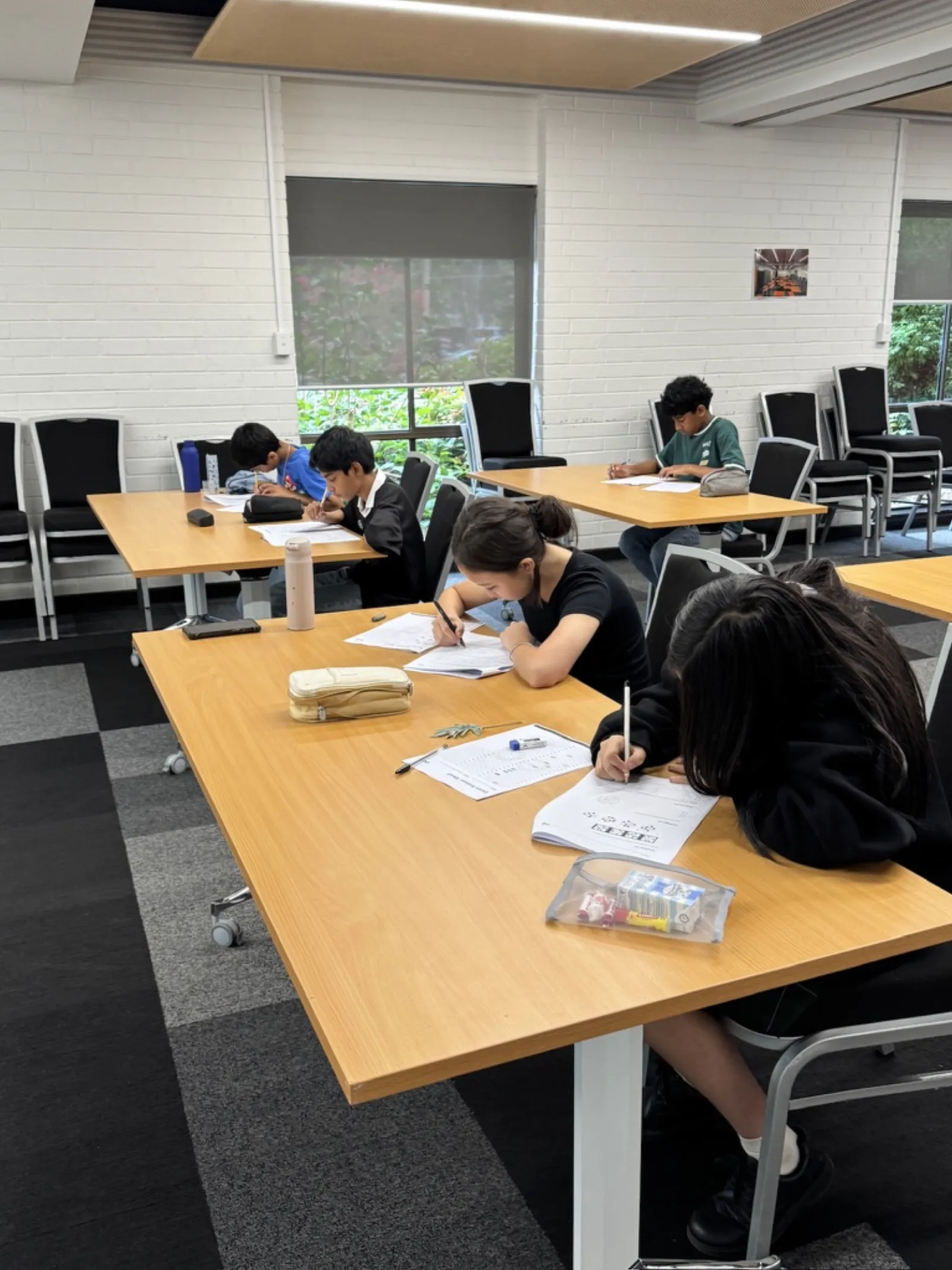
Our students come from leading selective & independent schools






The 10 week plan
Every week, published up front.
Two cohorts, two different courses. Pick your child's year level to see the topics they would cover, week by week, from the first class to the final exam.
The algebra spine senior Maths opens on and assumes a student already has. Ten weeks from multi-step equations to quadratics, which is Year 10 content taken while your child is still in Year 8 or 9.
- Who it is for
- Current Year 8 and Year 9
- Where it finishes
- Finishes on Year 10 quadratics
- 1Week 1
Linear Equations: Multi-Step Solving
- Linear equations
- Multi-step solving
- Variables on both sides
- 2Week 2
Fractions, Inequalities and y = mx + c
- Equations with fractions
- Inequalities
- Gradient
- y = mx + c
- 3Week 3
Coordinate Geometry
- Plotting lines
- Intercepts
- Midpoint and distance
- Parallel and perpendicular
- 4Week 4
Simultaneous Equations: Substitution and Elimination
- Simultaneous equations
- Substitution
- Elimination
- Week 5Progress quiz · 25 min
Simultaneous Equations: Graphs and Worded Problems
- Graphical method
- No solution and infinite solutions
- Worded problems
- Break-even
- 6Week 6
Expanding and Factorising
- Binomial products
- Perfect squares
- Difference of two squares
- Common factors
- 7Week 7
Factorising Monic Trinomials
- Monic trinomials
- Factor pairs and signs
- Common factor first
- 8Week 8
Non-Monic and Mixed Factorising
- Non-monic trinomials
- Splitting the middle term
- Grouping
- Choosing the method
- 9Week 9
Quadratic Equations: The Null Factor Law
- Null factor law
- Solving by factorising
- Rearranging to zero
- Exact surd solutions
- Week 10Final exam
Parabolas: Intercepts, Turning Point and Sketching
- x and y intercepts
- Turning point
- Axis of symmetry
- Sketching
Provectus (Year 8/9): start with the free 25 minute assessment, 30 questions sat at home, so week one aims at the right gaps.
Why get ahead now
Being ahead is a compounding advantage.
Maths is cumulative, so a gap does not stay the size it started. A student who is fluent when a topic arrives in class spends that lesson consolidating; a student who is not spends it catching up, and then meets the next topic already behind. Ten weeks above year level changes which of those two your child is.
- Meet the topic in class already fluent, not for the first time
- Spend school lessons consolidating instead of catching up
- Reach the Year 10 subject choice with it still open
Maths readiness over time
Illustrative - how Maths readiness compounds when students get ahead early.
Why Maths, and where it leads
One subject. Three senior pathways.
We go deep on one subject because Maths compounds harder than anything else into Year 11 and 12. Methods and Specialist in Victoria and Queensland, Advanced and Extension in New South Wales, and the maths-heavy sciences in all three stand on the same algebra. Here is what it opens in each state.
The Victorian pathway
VCE Methods & Specialist
In Victoria these are the two highest-scaling Maths subjects. A study score is scaled by the subject it came from, so the same raw score is worth far more out of Specialist or Methods than out of General.
Victorian VCE study scores: the same raw 35, scaled three ways, 2025 VTAC scaling report. Run the numbers
All three states
What senior Maths is called where you are
Victoria, New South Wales and Queensland all build Years 7 to 10 Maths on the same Australian Curriculum, so the content is the same in all three. Only the senior subject names change, and a parent searching for the wrong one finds nothing, so here they are.
- VCEVictoria
Mathematical Methods and Specialist Mathematics
- HSCNew South Wales
Mathematics Advanced, Extension 1 and Extension 2
- QCEQueensland
Mathematical Methods and Specialist Mathematics
Scaling works differently outside Victoria, so there is no equivalent of the Victorian scaling table. What carries across is the content, and the content is the same.
10 weeks, two cohorts, Term 4 2026, starting the week of 6 October.
AI + data
We don't guess. We measure.
Two assessments in ten weeks, and both are analysed rather than just marked. EduVerse's system breaks each student, and the whole cohort, down to the topic and question level. So teaching targets what the numbers say needs work.
AI finds the gaps
The week 5 quiz and the final exam are broken down to the topic and question level, even flagging mis-keyed or confusing questions.
Data targets the teaching
Tutors start each week knowing exactly what to reteach and who needs help, so class time hits real weaknesses.
Progress you can see
Clear reports track your child's movement across the ten weeks, topic by topic, so the head start is measured rather than assumed.
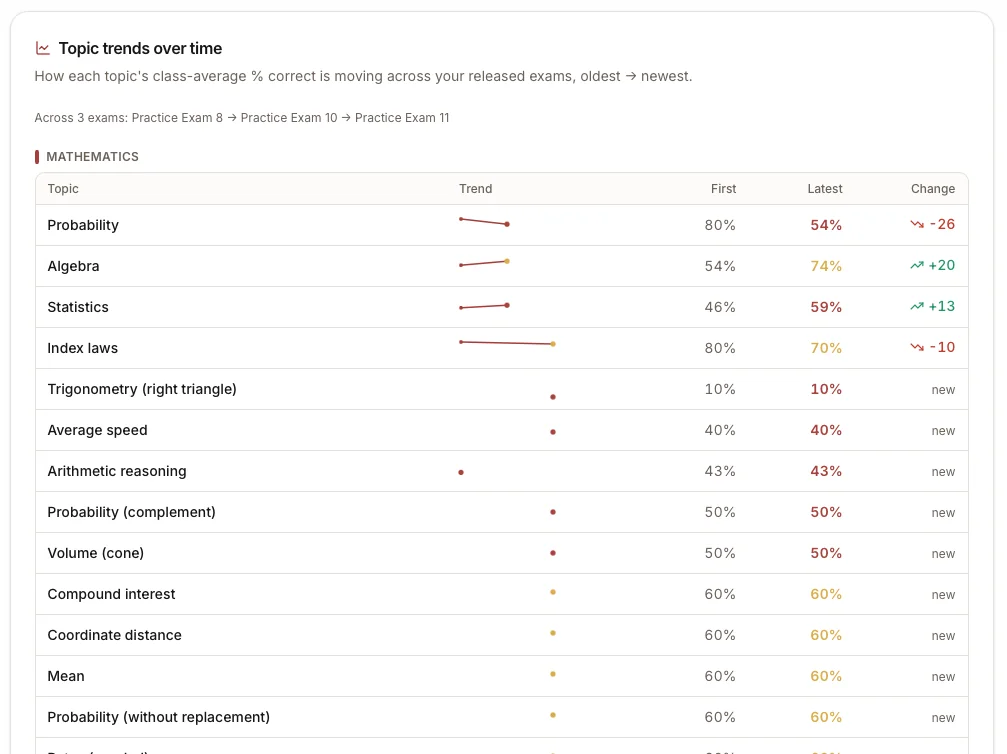
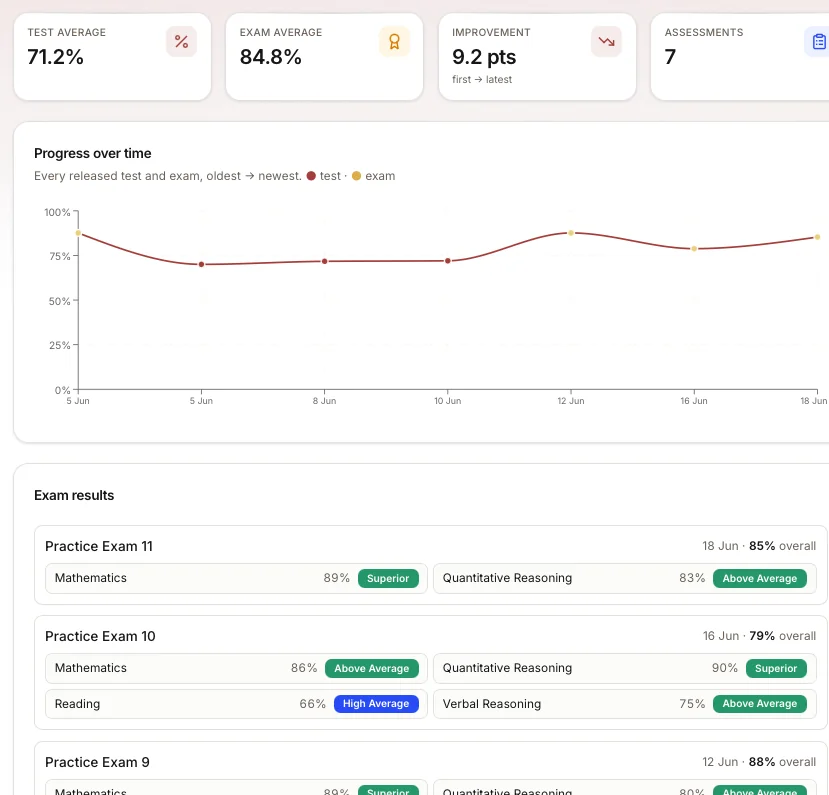
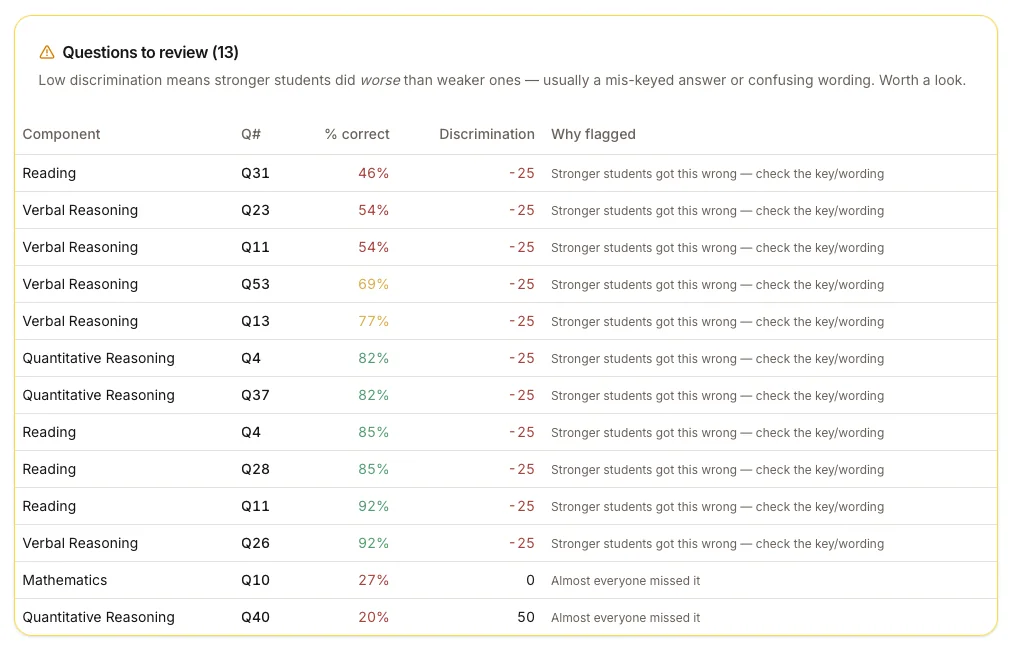
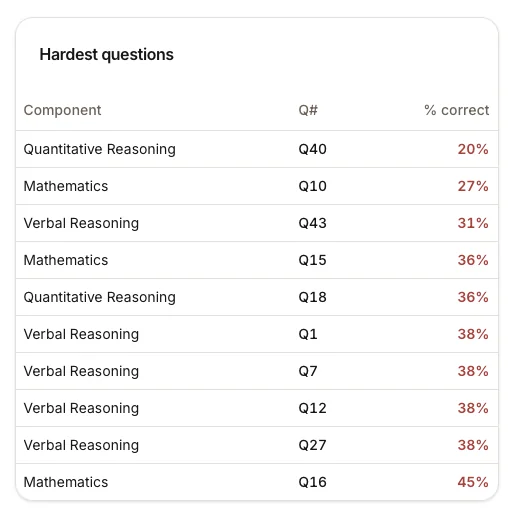
Real views from the EduVerse learning portal.
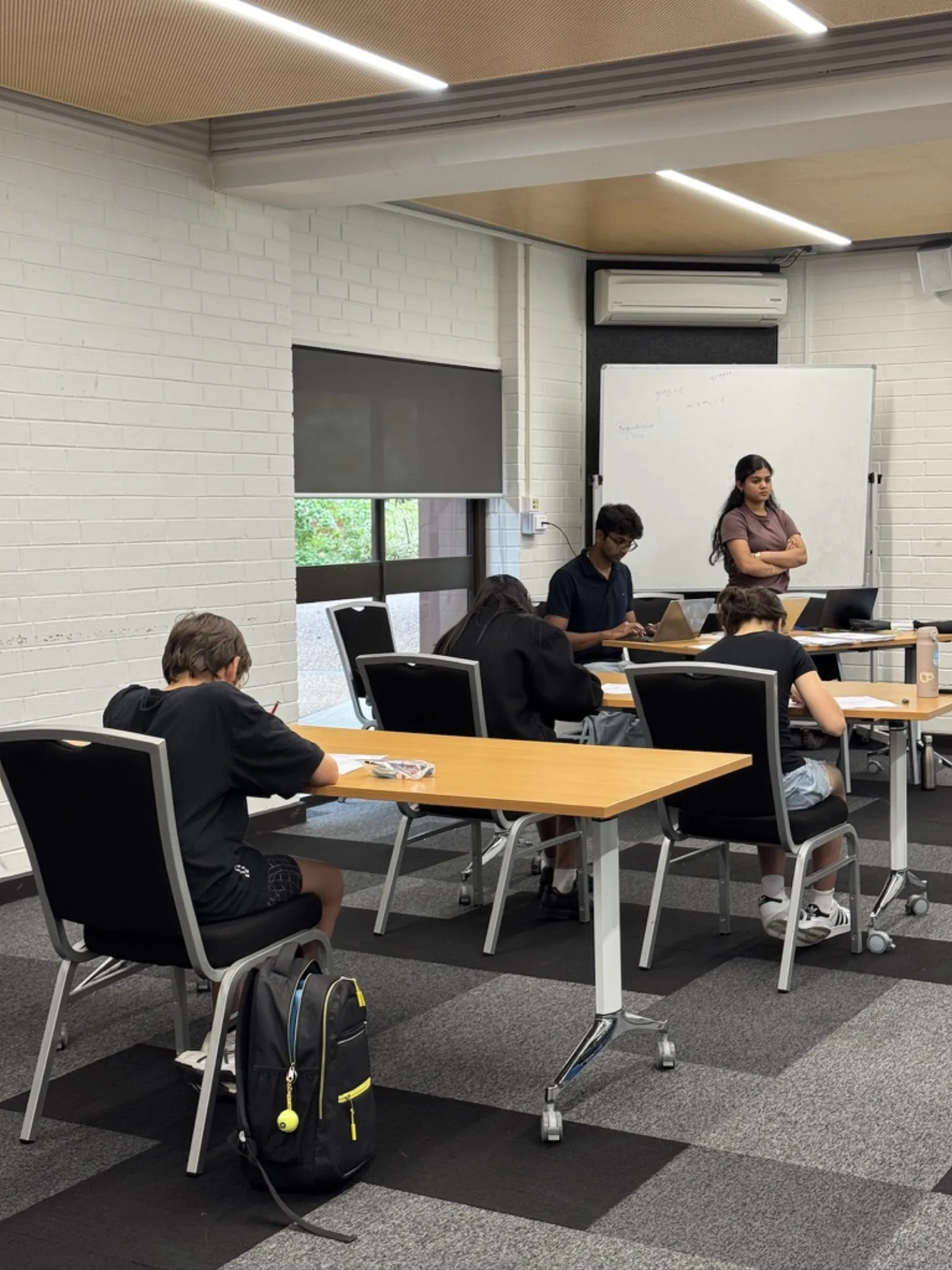
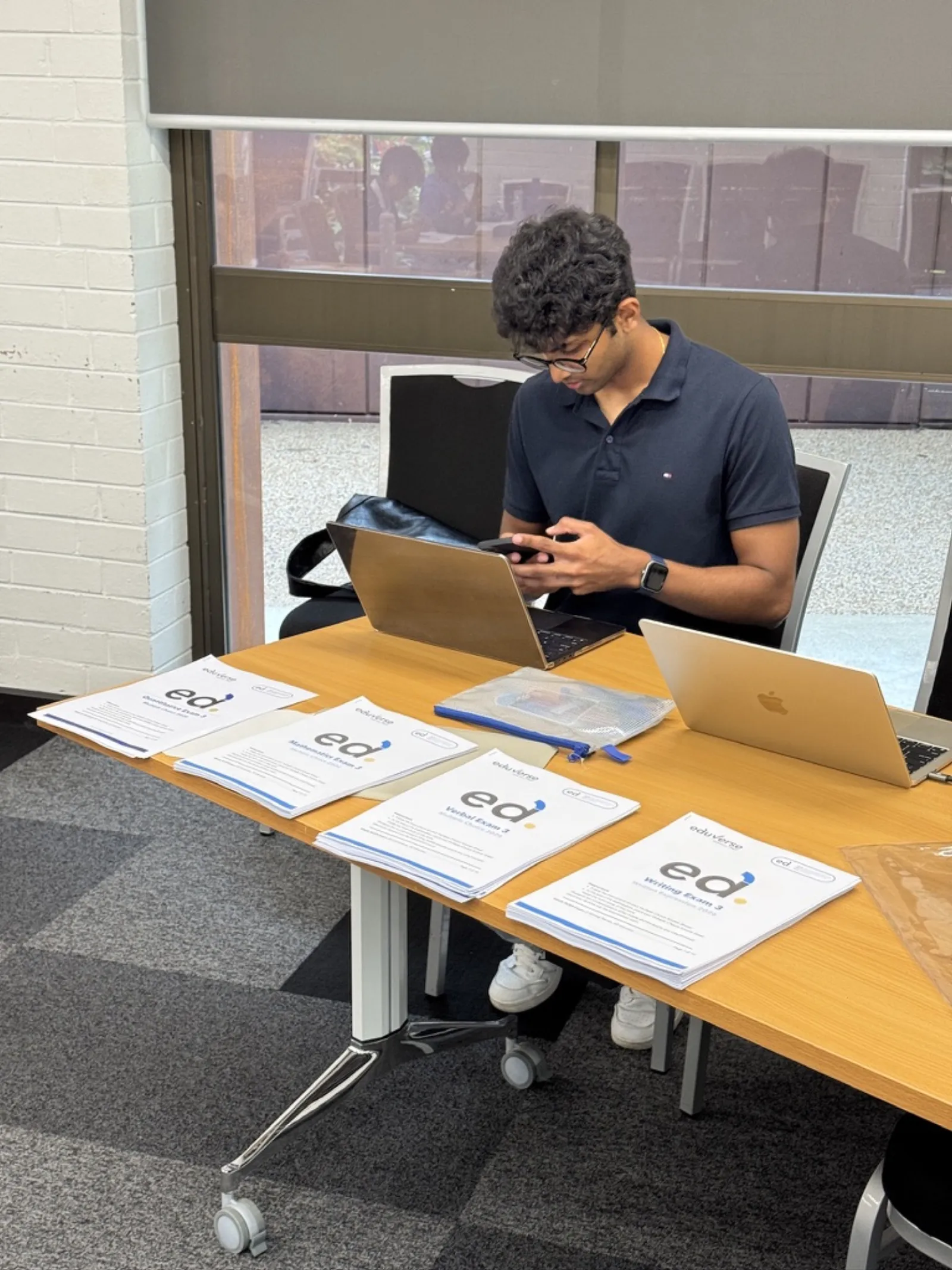
Inside the course
What a Fastrack week looks like.
A live, small-group class taught above year level, backed by practice, written feedback and 1:1 help whenever it is needed. Structured, personal, always moving forward.
Live small-group class
Ninety minutes, capped numbers, taught by tutors who finished in the top 1% for senior Maths. Never a passive lecture.
1:1 support on demand
Stuck mid-week? Book a one-on-one and close the gap before the next topic lands on top of it.
Practice + real feedback
Weekly problem sets marked with personal, written feedback, so a misconception gets named rather than repeated.
The difference
School covers the year level. Fastrack gets you ahead of it.
Typical school Maths
- Teaches to the middle of the class, at one fixed pace
- Extension is whatever time is left once the class has caught up
- You find out how they are going at report time
- Large classes, little individual attention
- Gaps stay hidden until a test exposes them
With Fastrack
- Accelerates above year level, in a cohort matched to your child
- Two separate courses, one per cohort, each taught above its year level
- A marked quiz at week 5 and a full exam at week 10
- Small groups plus 1:1 support on demand
- Every assessment is analysed to the topic, then retaught
The Fastrack offer
Everything included.
One simple decision.
You pay for the ten weekly classes. Every piece of support around them is bundled in, free.
The core course - what your fee covers
- Ten weekly 90-minute live small-group classes, taught above year level
- A published week-by-week curriculum for your child's cohort, mapped to the Australian Curriculum
Then everything below - included free
- 1:1 sessions whenever your child needs them
- Weekly practice sets with personal, written feedback
- A 25 minute progress quiz at week 5, marked and reported
- A full exam in week 10, marked with worked solutions
- 24/7 question support between classes
- Parent progress reports across the term

Your enrolment
10 weeks. One subject. Every advantage.
- All 10 live classes plus the full course curriculum
- Every bonus included, free
- Both assessments marked and reported: week 5 quiz, week 10 exam
- No lock-in. Full refund after your first class.
The no-risk start
Full refund after your first class if it is not right, no questions asked.
Capped class sizes, so a consultation is how we check there is room
100% online, via Zoom
No travel, no wasted evenings. Every session runs live from home, and the optional 1:1s flex around your family's week. The class began with Melbourne families and runs entirely online, so a Sydney or Brisbane family joins the same room at the same moment.
- VIC and NSW10:30am to 12:00pm
- QLD9:30am to 11:00am
- VIC and NSW6:30pm to 8:00pm
- QLD5:30pm to 7:00pm
- VIC and NSW7:00pm to 8:30pm
- QLD6:00pm to 7:30pm
- VIC and NSW6:30pm to 8:00pm
- QLD5:30pm to 7:00pm
Queensland classes sit one hour earlier in local time, because Queensland does not observe daylight saving. The course runs entirely inside daylight saving (Term 4 2026, starting the week of 6 October), so that offset holds for all 10 weeks and nothing shifts mid-course.
Getting started
Three steps to week one.
Pick the cohort and book
Two minutes. Tell us your child's year level and we match them to Tiro (Year 6/7) or Provectus (Year 8/9), then to the class night that fits your week.
We set the starting point
Your child sits a free assessment for their own cohort at home: 25 questions in 25 minutes for Tiro (Year 6/7), 30 in 25 for Provectus (Year 8/9). It comes back marked with worked solutions, so week one aims at the right gaps.
Ten weeks, ending with the exam
Your child joins their group's class night and the course runs its published plan: ten teaching weeks, a quiz at week 5, and the exam alongside the final topic in week 10.
Free. No payment details. Years 6 to 9.
Parent FAQs
Your questions.

Enrolling now · Term 4 2026, starting the week of 6 October
Ten weeks. Get them ahead.
Book a free consultation and we will match your child to Tiro (Year 6/7) or Provectus (Year 8/9), check there is room in the group, and set the start date.